What is GEO (Generative Engine Optimization)?
GEO stands for Generative Engine Optimization. It is the practice of optimising a brand’s presence across the web so that AI-powered answer engines - including ChatGPT, Perplexity, Google AI Overviews, and Gemini - include the brand in synthesised responses to consumer queries. GEO focuses on generating authentic human signals across indexed public platforms, rather than optimising page metadata for keyword ranking algorithms.
How is GEO different from SEO?
SEO (Search Engine Optimization) optimises web pages to rank in keyword-based search results, where users choose from a list of links. GEO optimises a brand’s overall web presence so that AI engines cite it when generating direct answers to consumer questions. SEO competes for clicks on a results page; GEO competes for inclusion in an AI-generated answer that the consumer reads without visiting any individual website.
What type of UGC is most valuable for GEO?
The most GEO-effective UGC is descriptive, situational, and specific - content that describes exactly how and when a product was used, what the outcome was, and how it compared to alternatives. Long-form Reddit comments, detailed product reviews, and video content with natural spoken descriptions outperform generic star ratings, scripted testimonials, and short social captions. Situational specificity is the key quality that makes UGC citable for long-tail AI queries.
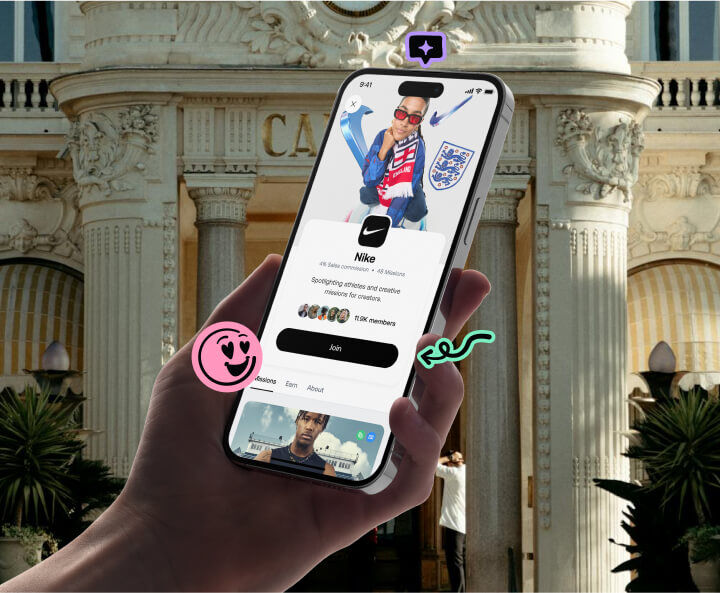
The brief matters more than the incentive. Community missions that ask members to “describe the exact situation in which you used this product” produce contextual citations that AI engines can use. Missions that ask for general endorsements produce generic content that carries minimal GEO weight. Through Club, brands can deploy structured missions with specific content prompts, directing their community to the platforms - Reddit, review sites, YouTube - where that content will have the most GEO impact.
How do AI engines find and use UGC?
AI language models are trained on large datasets scraped from the public web, including Reddit, review platforms, forums, social media, and news sites. UGC posted on public, indexed platforms enters the training data that models use to build their understanding of brands and products. More recent content is also indexed continuously via real-time web search integrations in tools like Perplexity and ChatGPT’s web browsing mode. Content in closed communities, private social settings, or paywalled platforms generally does not contribute to AI engine training data.
Can B2B brands benefit from GEO through UGC?
Yes. While GEO is most immediately impactful for consumer product brands, B2B brands benefit from the same principles. Professional community discussions on LinkedIn, software reviews on G2 and Capterra, and customer case study content all function as UGC in the GEO sense - authentic, third-party human accounts that AI engines treat as higher-veracity than branded content. B2B buyers increasingly use AI engines to shortlist software vendors and service providers, making GEO highly relevant for any B2B brand with a significant inbound research component.
Brands running active community UGC campaigns through Club typically see measurable improvements in AI recall within four to eight weeks of launching their first structured missions, assuming the content is being directed to publicly indexed platforms. Results depend heavily on the volume and quality of content generated. A campaign generating 500 high-quality contextual citations across Reddit and review platforms will produce faster GEO improvement than one generating 5,000 generic star ratings. Continuous missions produce more durable results than burst campaigns, because AI engines weight freshness alongside volume.

 ROI Calculator
 Sign up for free